If you’re trying to figure out how much does Google Ads cost, there isn’t one price that applies to every business. Your costs depend on what you sell, the keywords you target, where you advertise, the type of campaign you run, and how much competition you face.
The average Google search ad click costs about $5.42 in 2026, but that’s just an average. Some businesses pay much less, while others pay more depending on their keywords, industry, and competition.
So, how much does it cost to run Google Ads? That depends on how much traffic you need and how much a lead or sale is worth to your business. A company paying $2 per click may have a poor campaign if none of those visitors convert. Another company could profit while paying $15 or more per click because a new customer is worth thousands of dollars.
The goal is not simply to get the cheapest clicks. It is to build a Google Ads campaign where advertising costs make sense compared with the revenue those ads produce.
Determining Your Budget: How Much Do Google Ads Cost?
Google Ads uses a pay-per-click model for many campaign types, which means advertisers generally pay when someone interacts with an ad rather than paying a fixed price simply to appear.
Your monthly cost starts with the average daily budget you set for each campaign. Google defines this as the amount you are generally comfortable spending per day over the course of a month. Actual spending may be higher or lower on individual days as Google responds to changes in available traffic and conversion opportunities.
One way to get a rough idea of your starting budget is to look at what you expect to pay for each click and how many clicks you want to generate. For instance, at an estimated $5 per click, 300 clicks would put your monthly ad spend at about $1,500.
That doesn’t mean $1,500 is automatically the right budget. You also need to estimate how many clicks will become leads or sales.
If 300 clicks produce 24 leads, your conversion rate is 8%. At $1,500 in spend, that equals a cost per lead of $62.50. Whether that is profitable depends on how many of those leads become customers and how much each customer is worth.
What Factors Determine Google Ads Cost?
Google Ads pricing is based on an auction. Every eligible search can create a new auction, which means the amount you pay can change from one search to another.
Several factors affect that cost.
Industry Competition
Industries where one customer can generate significant revenue usually have more advertisers willing to bid aggressively.
For example, 2026 search advertising benchmarks show an average CPC of $9.87 for attorneys and legal services, compared with $3.22 for real estate, $2.14 for travel, and $2.05 for restaurants and food.
This is why asking for an industry average is more useful than comparing your Google Ads account with every advertiser on the platform.
Keyword Competition
The keywords inside your ad groups also affect price.
Commercial searches tend to attract more advertisers because the person searching may be close to making a purchase. A broad informational search can cost less than a highly specific search from someone actively looking for a service.
For example, an advertiser may be willing to pay more for a keyword tied directly to booking a service than for a keyword used mainly for research.
Your keyword strategy should balance:
- Search intent and relevance
- Expected CPC
- Conversion potential
- Competition
- Expected customer value
A cheaper keyword is not automatically better. If an expensive keyword consistently brings qualified customers, paying the higher CPC can make sense.
Geographic Targeting
Location matters too.
Businesses competing in a large, crowded city may face different costs than businesses advertising in a smaller market. Your service area, local competitors, population, and search demand can all change how much you need to bid.
Geographic targeting also gives you control over where your budget goes. Instead of advertising everywhere, you can focus spending on cities, neighborhoods, regions, or other areas that matter most to the business.
Quality and Relevance
Google does not determine results based on bids alone. Ad quality and relevance also matter.
Your ad copy should closely match what the person searched for, and the destination page should continue that same message. A good landing page experience makes it easy for someone to find what the ad promised and complete the next action.
Factors such as expected CTR, ad relevance, landing page quality, bid, and auction context can influence Ad Rank and where an ad appears.
That means better campaigns aren’t always the ones willing to spend the most money.
Bidding Strategy
Your bid strategy tells Google what result you want the system to prioritize.
Common options include:
- Maximize Clicks: Tries to generate as many clicks as possible within your budget.
- Maximize Conversions: Focuses spending on generating as many conversions as possible within the available budget.
- Target CPA: Bids based on a desired average cost per acquisition.
- Target ROAS: Focuses on conversion value while working around a desired return on ad spend.
- Manual CPC: Lets advertisers set maximum CPC bids themselves, where available.
Google classifies Maximize Conversions, Target CPA, Maximize Conversion Value, and Target ROAS as Smart Bidding strategies. These strategies use auction-level signals to adjust bids based on the likelihood or expected value of a conversion.
Your bid strategy should match your objective and the amount of reliable conversion data available.
Campaign Type
Costs also change based on where and how the ads appear.
- Search campaigns reach people searching for relevant products and services. They often have higher CPCs because search can show strong intent.
- Display campaigns place visual ads across sites and apps on the Google Display Network. They are often used for awareness and remarketing.
- Shopping campaigns focus on product advertising and can be a strong fit for ecommerce businesses.
- Performance Max can access Google inventory across Search, YouTube, Display, Discover, Gmail, and Maps through one goal-based campaign.
- YouTube and video campaigns can help businesses reach people with video content at different stages of the buying process.
Google supports several campaign types because each serves a different purpose. Search, Display, Video, Performance Max, and other formats also have different settings and available ad formats.
Seasonality
Competition rarely stays the same throughout the year.
Retail advertisers may spend more during the holiday season. Travel companies can face heavier competition during popular booking periods. Home service businesses may see demand rise or fall with weather and seasonal needs.
If more advertisers compete for the same searches, CPC can increase.
Compare year-over-year performance rather than treating every monthly CPC change as a campaign problem. Seasonality may explain part of the difference.
7 Tips to Help Determine Your Google Ads Budget
No perfect budget calculator fits every company. These seven areas can help you decide what your business can reasonably invest.
Tip #1. Two key metrics help determine your cost.
Two useful numbers are the value of your typical sale and the margin you keep.
These help establish how much you can afford to spend to acquire a customer.
a) Average deal size
Average deal size is the average value of a sale or contract.
Suppose you close two deals worth $40,000 and $50,000. Your average deal size would be $45,000.
A company selling a $45,000 service can usually tolerate a higher cost per lead than a company selling a $40 product. That is one reason CPC varies so much between industries.
Evaluate average deal size alongside your close rate. A $500 lead could make sense for a high-value service if enough qualified leads turn into customers.
b) Product margin
Revenue alone does not tell you how much you can afford to spend.
Margins matter.
Two businesses might both generate $10,000 from a new customer, but the business that keeps $6,000 after direct costs has much more room for advertising than one that keeps $1,500.
The original comparison between B2B and B2C can still be useful as a general model:
| Market | Traffic Bid Cost | Sales Cycle | Ad Budget |
| B2B | Higher | Longer | Higher |
| B2C | Lower | Shorter | Lower |
These are general patterns, not rules. Some B2C industries can have very high CPCs, while some B2B keywords may be relatively inexpensive.
Tip #2. Be aware that ad costs differ by industry.
Current benchmarks make industry differences clear.
According to WordStream‘s 2026 search advertising benchmark study, the overall average cost per click CPC was $5.42, but Attorneys and Legal Services averaged $9.87 while Arts and Entertainment averaged only $1.63. Real Estate averaged $3.22.
So, what is a good CPC for Google Ads?
There is no universal target. A good CPC lets you acquire profitable customers at a sustainable cost.
The same applies to CTR. The 2026 overall search benchmark was 6.64%, but results differed considerably by industry. For example, Real Estate averaged 7.61%, Attorneys and Legal Services averaged 5.87%, and Travel averaged 9.32%.
If you’re asking what a good CTR for Google Ads is, use your industry average as a reference, then judge your campaign based on qualified clicks and conversions rather than CTR alone.
Tip #3. Consider cost within a historical perspective.
The original version of this article listed an average search CPC of $2.69 in 2019 and $2.41 in 2020.
Costs look very different now.
WordStream’s historical comparison places average CPC at $2.32 in 2016 versus $5.42 in 2026, meaning the reported average has more than doubled over the past decade.
Compared with the bigger changes over the past decade, the jump from 2025 to 2026 is fairly modest. Average CPC increased from $5.26 to $5.42.
That’s useful context, but historical CPC alone shouldn’t determine your budget. What matters more is how well your campaigns convert, what you’re paying to acquire a lead, and how much revenue those customers bring in.
Tip #4. Know how Google Ads/Ads fits into your overall marketing plan.
Paid search works best as one part of a broader marketing plan.
Someone may first discover your company through organic search, social media, a referral, or another channel. Later, they might click on your ads while actively comparing services.
This also means Google Ads and SEO should not always be treated as competing choices.
Google Ads can create traffic as soon as campaigns begin serving, while SEO often requires more time to build organic visibility. Paid ads stop producing paid traffic once spending stops, while a strong organic page can continue attracting visitors.
For many businesses, using both channels makes more sense than asking which one is universally cheaper.
Tip #5. Understand cost and traffic flow through a marketing funnel.
People do not all click on your ads at the same stage of the buying process.
A typical funnel may include:
- Unaware
- Problem-Aware
- Solution-Aware
- Product/Service-Aware
- Most Aware
- Remarketing / Cart Checkout
Someone early in the funnel may be researching a problem. Someone near the bottom may be comparing providers or preparing to buy.
That difference affects keyword selection, ad copy, landing pages, CPC, and conversion rates.
Sales Funnel
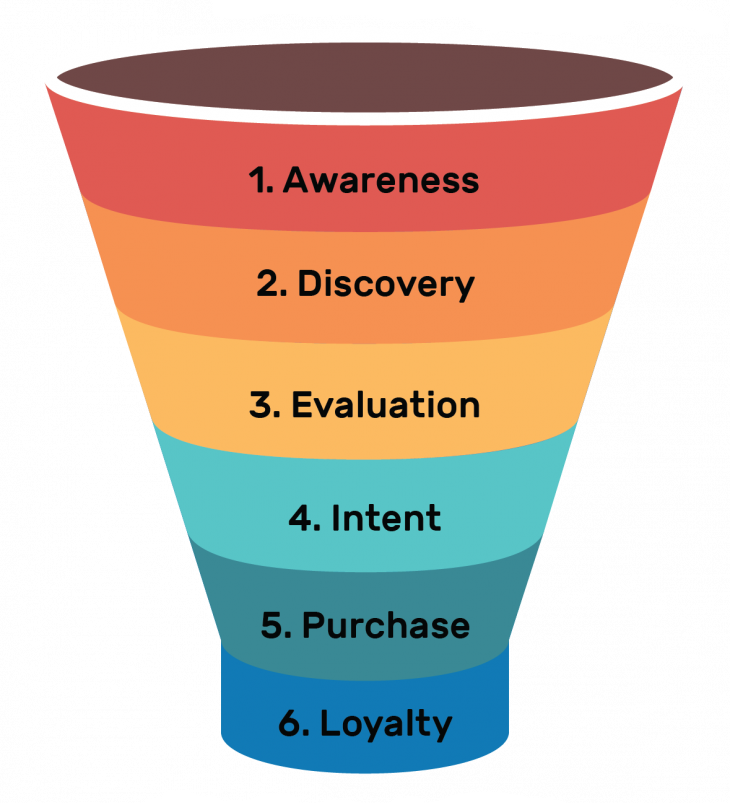
Your ads should match where someone is in the buying process. Search ads can reach people who are ready to take action; remarketing ads can bring previous visitors back to your website.
This is another reason looking at clicks alone can be misleading. A click only matters if it helps move the right person closer to becoming a customer.
Tip #6. Plan and strategize before spending.
More budget does not automatically create better results.
Before increasing spend, make sure your Google Ads campaign collects accurate conversion data and sends people to pages built around the same intent as the ads.
Check search terms, negative keywords, geographic settings, conversion tracking, ad groups, landing page experience, and the actions people take after they click on your ads.
You should also give campaigns enough time and data to evaluate performance.
So, how long does it take for Google Ads to work?
The time needed depends on search volume, budget, conversion volume, campaign changes, and the bid strategy used. A low-volume account may need far more calendar time to gather useful data than a high-volume account.
Avoid judging a campaign based on its first few clicks.
Does Google Ads Have a Minimum Budget?
Google Ads doesn’t require a universal minimum monthly advertising budget. You choose how much you are willing to spend based on your goals, competition, and expected cost per click. However, setting a budget too low can make it difficult to generate enough traffic and conversion data to judge campaign performance.
A few factors can help you decide where to start:
- Average daily budget: You set an average daily budget for each Google Ads campaign and can adjust it as needed. Google uses this amount as a spending guide throughout the month, so actual spend can vary from day to day.
- Expected cost per click: Your budget needs to account for how much each click may cost. For example, a $10 daily budget equals roughly $300 per month. At a $5 CPC, that budget could generate around 60 clicks before accounting for daily spending differences.
- Available search demand: A very small budget may limit how often your ads appear, especially if you target competitive keywords with high search volume.
- Conversion rate and lead goals: Traffic alone is not enough. Consider how many visitors are likely to convert and how many leads you need. If only a small percentage of 60 monthly clicks convert, you may have too little conversion data to properly evaluate the campaign.
The right budget gives your campaign enough room to generate meaningful traffic and conversions without spending more than your business can reasonably afford to acquire new customers.
Is Google Ads Worth the Cost?
Google Ads can be worth the cost, but profitability depends on the campaign math.
A simple way to evaluate it is to compare your CPC, conversion rate, cost per acquisition, close rate, and customer value.
Suppose you spend $2,000 and generate 20 leads. Your cost per lead is $100. If four become customers, your advertising cost per new customer is $500.
If each customer produces $3,000 in profitable value, the campaign may make financial sense. If each customer produces only $300, it does not.
This is why conversion tracking is critical. Without accurate tracking, you can see how many people click on your ads but cannot reliably tell which keywords, ads, landing pages, or campaigns produce meaningful business results.
The question is therefore less about whether Google Ads works in general and more about whether Google Ads works profitably for your business.
Good targeting, useful ad copy, relevant keywords, accurate tracking, a suitable bid strategy, and strong landing pages all influence that answer.
If you want help building or improving campaigns around measurable business goals, Oyova’s paid search team can help you turn your Google Ads budget into a strategy based on leads, sales, and long-term customer value.
Related Posts

Google Local Services Ads Are Moving to Performance Max: What Your Business Needs to Know
Google Local Services Ads are changing in 2026. Google is moving these campaigns from the separate Local Services...
Read More
Google Ads Verification Requirements 2026
Google Ads verification requirements help Google confirm who is paying for ads and which business or person is...
Read More
Marketing Attribution for High-Intent Leads in 2026: How to Track Calls, Forms, and Offline Sales Without Broken Data
If your company depends on quote requests, consultation calls, demo forms, booked meetings, or sales conversations that happen...
Read MoreOur Awards