
Your team can be the best in town, and you can still watch growth stall out. That’s the frustrating reality for many home service companies. The work is excellent, the reviews are solid, but the phone still isn’t ringing enough.
Usually, the problem isn’t the work. When it comes to marketing for home services companies, it’s often the lack of a real strategy.
Homeowners research before they ever pick up the phone. In fact, 98% of consumers search online before hiring a home services business. That’s almost everyone. And a lot of those searches aren’t casual browsing. They’re ready to book.
Competition for that attention is fierce. Local markets often have three or four companies fighting over the same “near me” search. So even if you have a decent website and run ads, you could still lack a real customer acquisition strategy.
This article is meant to close that gap. Growth isn’t about generating more traffic. It’s about turning visibility into leads, leads into booked jobs, and booked jobs into repeat and referral business. Here’s how to build a home services marketing strategy that actually does that.
What Is Home Services Marketing?
Home services marketing is the full process of getting a plumbing, HVAC, electrical, roofing, pest control, or landscaping business found by the right customers, then moving those customers from first search to booked job to repeat business. It’s not one tactic. It’s a system with six connected parts:
-
- Getting found by people who need your service right now
- Building enough trust that they choose you over your competitors
- Generating leads through calls, forms, and bookings
- Converting those leads into paying customers
- Retaining customers so one job turns into several
- Scaling the whole process as the business grows
Treat any one of those pieces as a standalone project, and the system breaks down. A great-looking website that no one finds is worthless. A flood of leads that never get a callback is worse than no leads at all.
Why Marketing for Home Services Is Different
Home service marketing doesn’t play by the same rules as, say, ecommerce or B2B SaaS marketing. A few things make it its own animal:
- It’s local. You’re not competing nationally. You’re competing with other companies within a five-mile radius.
- Service areas are geographic. Your marketing has to reflect the specific cities, counties, or zip codes you actually cover.
- Searches are high-intent. Someone searching “AC repair near me” usually needs help today, not eventually.
- A lot of demand is urgent. Burst pipes and dead furnaces don’t wait for business hours.
- The phone is still a primary conversion channel, alongside forms and online booking.
- Trust carries enormous weight, because you’re coming into someone’s home.
- Reviews shape decisions more than almost any other factor. 91% of homeowners read local reviews, and most won’t consider a business rated below four stars.
- Customer lifetime value varies a lot by service. A one-time roof replacement looks very different from a recurring HVAC maintenance plan.
- Demand is often seasonal, whether that’s AC repairs in July or gutter cleaning in the fall.
Any marketing plan that ignores these realities is built on borrowed strategy from a completely different industry.
The Goal Isn’t More Traffic. It’s Getting More Qualified Customers.
It’s easy to get seduced by vanity metrics. Traffic, impressions, and rankings are up. However, none of that pays the bills. What actually matters to a home service business owner is:
- Qualified leads, not just clicks
- Booked appointments
- Completed jobs
- Customer acquisition cost
- Revenue
- Customer lifetime value
If a marketing report leads with sessions and pageviews instead of booked revenue, it’s measuring the wrong thing. Every tactic below should ultimately tie back to one of those business metrics.
Marketing for Home Services: Build Your Strategy Around the Customer Journey
Instead of chasing a checklist of disconnected tactics, organize a home services marketing strategy around how a customer moves from “I have a problem” to “I hired someone to fix it.”
Awareness: How Will Customers Discover Your Business?

A customer with a leaking water heater has more ways to find you than ever, including:
- Google Search
- Google Maps and the local map pack
- AI-powered search tools
- Social media
- Local directories
- Referrals
- Paid advertising
- Community marketing and local sponsorships
Most companies lean hard on one or two of these and ignore the rest. The businesses that grow consistently show up in several places at once, so they’re not entirely dependent on any single channel staying healthy.
Consideration: What Makes a Homeowner Pick Your Company?
Finding your business is only the first step. Once a homeowner has a few companies to choose from, they’re looking for reasons to trust one over the others.
That decision may come down to things like:
- Recent reviews and overall rating
- Customer testimonials and case studies
- Proper licensing and certifications
- Experience with the type of work they need
- Guarantees or warranties
- Photos of completed projects
- Straightforward pricing information, when available
- Helpful answers to questions they’re likely to have
Reviews can be especially influential. A roofing company with hundreds of recent reviews gives a potential customer much more confidence than one with only a handful, even if both companies do quality work.
Conversion: Make It Easy to Take the Next Step
Getting someone to your website doesn’t mean you’ve earned the lead yet. If a homeowner has to hunt for your phone number or fill out a long form just to request an estimate, they may go with another company.
Make contacting you as simple as possible with:
- A phone number that’s easy to find and tap on a mobile device
- Short quote forms that only ask for necessary information
- Online scheduling for customers who prefer not to call
- Clear calls to action for emergency services
- A mobile-friendly website that’s easy to navigate
- Quick follow-up when a call or form submission comes in
Retention: How Do You Turn One Job Into Long-Term Revenue?
Getting a customer to book once is valuable, but home service companies have another opportunity after the work is finished. A completed job can lead to another service later or a referral to a friend or neighbor.
That might mean setting up maintenance plans, sending seasonal reminders, or making it easy for customers to schedule their next service. Email marketing can also help keep the company top of mind for past customers when they need related work.
Build a Home Services Website That Turns Visitors Into Leads
Traffic without conversion is just an expensive vanity metric. If your home services website isn’t turning visitors into calls and quote requests, everything upstream of it is wasted spend.
Create Dedicated Pages for High-Value Services
A generic “Services” page that lists everything you do in one paragraph won’t rank and won’t convert. High-value services deserve their own dedicated pages, such as:
- Emergency plumbing
- AC repair
- Electrical panel upgrades
- Roof replacement
- Pest control
- Landscape design
Each page targets its own keyword, speaks directly to that specific need, and gives search engines (and AI search tools) a clear, focused page to point people toward.
Make Every Service Page Answer the Customer’s Questions
A strong service page answers the questions a homeowner is already asking before they call:
- What is this service, exactly?
- When do I actually need it?
- What does the process involve?
- How much does it typically cost?
- Why should I trust this company to do it?
- Is this service available where I live?
- How do I get started?
Answer all of the questions, and you’ll rank better, get quoted more accurately by AI search tools, and convert more of the visitors you already have.
Give Customers a Simple Way to Book
Once a homeowner is ready to contact you, the process should be straightforward. They shouldn’t have to search through the site for a phone number or fill out a lengthy form before they can ask for help.
Make the next step easy by giving customers a few simple options:
- Keep the phone number easy to find, especially on mobile
- Use click-to-call buttons so customers can reach you with one tap
- Keep quote forms short and limited to the information you actually need
- Give customers the option to request a time online instead of calling
- For emergency services, make it immediately clear how customers can get help
- On mobile, keep the phone option within easy reach as visitors scroll
The easier it is to contact your business, the fewer opportunities a ready-to-hire customer has to leave your site and call someone else.
Match the Landing Page to the Marketing Channel
If someone clicks an ad for “Emergency AC Repair Tampa,” they should land on an Emergency AC Repair Tampa page, not your homepage. Sending paid traffic to a generic landing page is one of the most common (and most expensive) mistakes in home services marketing. Every channel deserves a landing page built for the exact intent behind the click.
Use Content Marketing to Build Visibility and Trust
Content only earns its keep when it drives business. It should never exist for its own sake.
Create Content Around Customer Questions
Homeowners search with real questions attached:
- How much does this cost?
- How long does it take?
- Is this actually necessary?
Content that answers those specific questions builds trust and gives you a reason to show up in both traditional search and AI-generated answers.
Create Content Around Services People Need
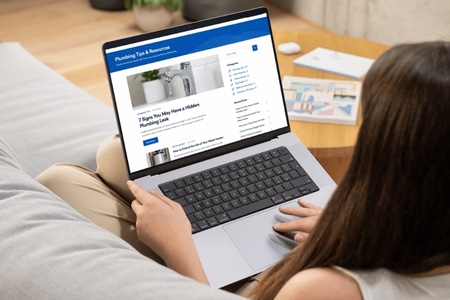
A homeowner who searches for “AC replacement cost” is in a different place than someone reading a general article about air conditioning. The same applies to searches such as:
- Which HVAC companies have the best reputation in [City]?
- Who can I call for a plumbing emergency nearby?
- Do I need to replace my electrical panel?
- Is it better to repair my roof or replace it?
- How much should I expect to pay for a new AC?
Move Readers From Content to Services
A blog post can introduce a problem, but the reader should be able to find the service that addresses it. From there, they can move to a relevant location page and, eventually, a contact or quote form.
The path might look like this:
Blog post → Service page → Location page → Contact or quote form
Turn Leads Into Customers With Better Follow-Up
Most home services marketing advice stops once you generate a lead. That’s a mistake, because generating the lead is only half the job.
Respond to A New Lead When It Comes In
When someone reaches out, response time can affect whether they choose your company. According to CallRail, 97% of homeowners say response speed and transparent pricing influence which service provider they hire. PipelineOn also cites research showing that 78% of customers hire the company that responds first.
Make sure your team has a process for:
- Missed-call follow-up
- Instant form notifications
- SMS follow-up
- Email follow-up
- Fast scheduling once contact is made
A great marketing engine feeding a slow follow-up process is a leaking bucket. You’re paying to fill it and losing the water anyway.
Don’t Let Estimates Go Cold
Some customers need time before they commit to a project. Track estimates that haven’t been approved and follow up when appropriate. The same applies when a technician recommends additional work, identifies a possible replacement, or a customer decides to put a project off.
Reactivate Existing Customers
Your existing customer list is one of the most underused assets in home services marketing. Reach back out around:
- Annual maintenance
- Seasonal service needs
- Filter or part replacements
- Inspection reminders
- Related services they haven’t used yet
Common Home Services Marketing Problems That Limit Growth
This guide isn’t just about generating more visibility. Visibility without a strategy behind it just means more people finding a system that still leaks leads. Watch for these warning signs.
You’re Relying on One Marketing Channel
Google Ads and referrals can bring in plenty of business, but relying on either one too heavily can leave you exposed when results change. A stronger marketing strategy gives customers several ways to find your company instead of depending on a single lead source.
Your Marketing Isn’t Targeting High-Value Services
Traffic can climb steadily while revenue stays flat because it isn’t aimed at the services that actually move the needle.
You’re Generating Leads but Losing Them During Follow-Up
Many home services businesses have a lead generation problem that’s really a follow-up problem in disguise.
Your Website Gets Traffic but Doesn’t Convert
A home services website can rank well and still fail to turn visitors into customers if it’s slow, confusing, or hard to use on a phone.
Your Marketing Isn’t Being Measured Against Revenue
If nobody can say which channels are actually producing booked jobs, budget decisions are guesswork.
You’re Not Adapting to AI-Powered Search
AI search tools are increasingly the first stop for homeowners researching a service. Businesses that only optimize for traditional search results are already falling behind in how customers actually find help.
When Should a Home Service Company Hire a Marketing Agency?

Not every business needs outside help, but a home services agency often makes sense when:
- Marketing efforts are inconsistent or reactive
- You’re trying to run marketing yourself on top of running the business
- Competitors are consistently outranking you
- PPC spend isn’t producing enough qualified leads
- Organic traffic isn’t converting into actual customers
- Your business is expanding into new service areas
- There isn’t enough internal expertise to run SEO, PPC, content, and AI search strategy at once
- The goal is to scale beyond what referrals alone can support
- Your business wants one integrated strategy instead of a patchwork of disconnected efforts
How Oyova Helps Home Service Companies Generate More Leads
Oyova brings the different parts of a home services marketing strategy together instead of treating each service as a separate effort, including:
- SEO that helps your business show up when people in your service area are searching for what you offer.
- With paid advertising, you can reach people looking for a service now, rather than waiting for organic rankings to grow.
- Website and conversion optimization focus on what happens once someone lands on your site, making it easier for them to find what they need and get in touch.
- Content marketing gives prospective customers answers to common questions and helps establish your business as a reliable source of information.
- AI search and GEO strategy address how homeowners are increasingly using AI tools during the research process, giving your business another way to be discovered.
- Measurement and analytics connect marketing activity with actual business results, including leads, calls, and booked jobs.
The same approach carries over to inbound and social media marketing. Each channel has a role, but they work toward the same goal rather than operating independently.
If your home service business is ready to take a more connected approach to marketing, Oyova can help you build a strategy around leads, customers, and revenue. Contact us today to get started.
FAQs
Marketing for home services is the process of getting a service-based business, such as plumbing, HVAC, electrical, or roofing, found by local customers, then converting that visibility into booked jobs and repeat business.
No single approach works for every home service company. Your market, services, competition, and growth goals all matter. In most cases, you’ll want a mix of local SEO, paid advertising, a website that makes it easy to contact you, and a reliable process for following up with new leads.
Start by looking at where your customers are already searching. That may include Google Search, Google Maps, and newer AI-based search tools. From there, make sure your website clearly explains your services and gives visitors an easy way to call, request an estimate, or get in touch.
Start with the plumbing services you want to sell most. Create useful pages for services such as emergency plumbing and drain cleaning, and make sure customers in your service area can find those pages in search results. Reviews can also make a difference when someone is comparing local plumbers. For emergency calls, responding quickly is especially important.
HVAC marketing tends to change with the seasons. Your priorities may shift toward AC repair and replacement during the warmer months and heating services when temperatures drop. Along with seasonal campaigns, focus on local search, maintenance plans, and making it easy for people to contact you when they need service.
Start with the electrical work customers in your area are actually looking for. Services such as panel upgrades, rewiring, and emergency electrical work can each have their own page rather than being grouped under one general services page. Keep your Google Business Profile and reviews up to date, since those often factor into a customer’s decision.
There isn’t a fixed amount that every home service company should spend. A reasonable budget depends on your market, competition, average job value, and how quickly you want to grow. It’s also worth looking at what you’re getting from your current marketing spend, including customer acquisition cost and the revenue those customers generate.
It depends on what you’re trying to accomplish. Google Ads can put your business in front of people who are searching for a service right now. SEO generally takes longer to build but can continue bringing in traffic without paying for every click. For many home service companies, using both lets them generate leads now while building organic visibility over time.
Extremely important. Since nearly every home services search is tied to a specific location, showing up in local search results and the map pack is often the difference between getting the call and losing it to a competitor.
Keep your Google Business Profile fully optimized, build a steady stream of recent reviews, make sure your service pages are locally relevant, and remove any friction between someone finding you and picking up the phone.
Related Case Studies
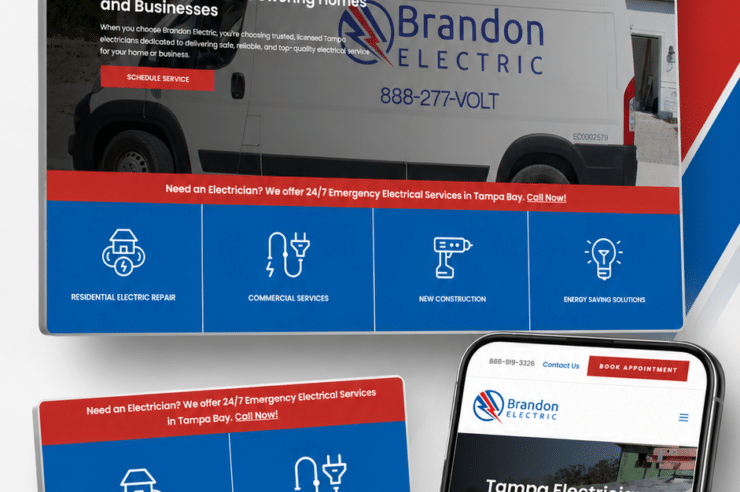
Brandon Electric
Home Services Digital Marketing & Website Development Support
Read More
JJM Plumbing
Local SEO Marketing & Website Development Support
Read MoreRelated Posts
Local SEO Marketing for Home Services Companies: Get More Business
A homeowner looking for a plumber, electrician, HVAC company, or roofer will often start with Google. They may...
Read More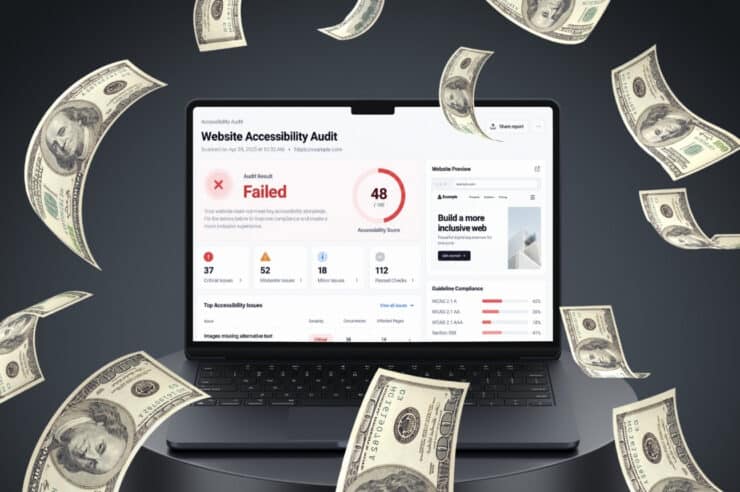
Website Accessibility Audit Cost and What Drives It
If you’ve started researching website accessibility audits, you’ve probably noticed there’s no one-size-fits-all price. Some websites can be...
Read More
Google Local Services Ads Are Moving to Performance Max: What Your Business Needs to Know
Google Local Services Ads are changing in 2026. Google is moving these campaigns from the separate Local Services...
Read MoreOur Awards